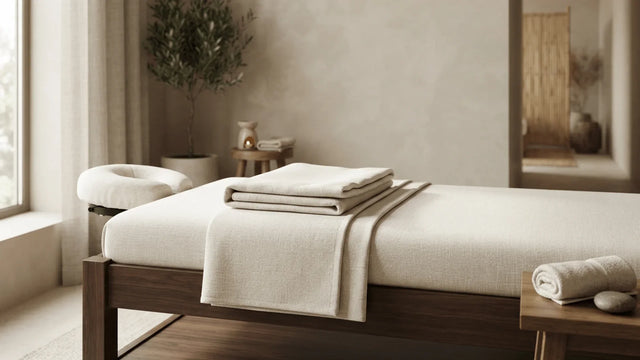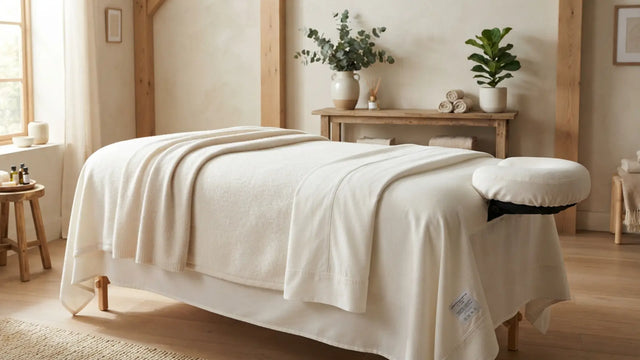

Hypoallergenic massage sheets are sheets made to lower the chance of a skin reaction for sensitive clients. No federal rule defines the word, so the fabric and the finish matter more than the label. 100% cotton is the best starting point because it is one natural fiber with no synthetic blend.
It is a starting point, not a guarantee. Dyes, finishes, and detergent residue are the usual causes of fabric reactions. This guide shows what to check and how to wash sheets for sensitive skin.
What Hypoallergenic Actually Means
The Asthma and Allergy Foundation of America (AAFA) quotes the FDA directly. There are no federal standards or definitions for the term hypoallergenic. The term means whatever a particular company wants it to mean.
So a sheet labeled hypoallergenic has not passed a government test. The label is a claim. You can check that claim against the fabric itself.
What to check instead of the label:
-
The sewn-in fiber content tag, as explained in our 100% cotton labeling guide
-
A named third-party certification, if your clients need documented testing
-
Clear care instructions that suit sensitive skin
What Actually Causes Skin Reactions to Sheets
DermNet, a dermatology reference, says allergic reactions to the fibers themselves are rare. Most textile contact dermatitis comes from chemicals added during processing. Those chemicals sit against bare skin for the whole session.
The usual suspects:
-
Dyes: loosely bound disperse dyes can rub off onto the skin
-
Finishes: formaldehyde resins are used to make fabric wrinkle-resistant
-
Detergent residue: fragrances, dyes, and preservatives left in the fabric
-
Products on the skin: fragranced oils and lotions that soak into the sheet
Hypoallergenic Massage Sheets: Why 100% Cotton Matters
100% cotton matters because it removes one variable. A blend adds a second fiber, and every added fiber brings its own dyes and finishes. Polyester, for example, is usually colored with disperse dyes, the dye group DermNet links to textile reactions.
What 100% cotton gives you:
-
One natural fiber: no synthetic blend to question or verify
-
Breathability: cotton lets heat and moisture escape during long sessions
-
Easier oil release: cotton rinses out massage oil more readily than many synthetic blends, so less residue stays behind
-
Dermatology support: DermNet advises wearing natural fabrics such as cotton if you are prone to textile dermatitis
None of this makes cotton allergy-proof. It makes cotton the lowest-risk place to start. The rest depends on dye, finish, and how you wash. 
Where 100% Cotton Is Not Enough
Dyes and Finishes
Cotton is still dyed, and some cotton is finished to resist wrinkles. DermNet advises choosing light colored items, which carry less dye. It also advises avoiding fabrics labeled non-iron.
For a client with known sensitivities, a natural or white sheet is the lowest-dye option. Wash any new sheet once before its first session.
Detergent Residue
Detergent is a common hidden trigger. Cleveland Clinic lists fragrances, dyes, and preservatives as frequent culprits. It recommends fragrance-free, dye-free detergent at the recommended amount, plus an extra rinse.
Massage sheets get washed often, so any residue builds up fast. Heavy scent in a laundry room can mean heavy scent on the skin.
Massage Oils and Lotions
Sheets hold whatever touches the client. Fragranced oils and lotions can irritate sensitive skin, and the sheet keeps them close. Ask about sensitivities at intake, and keep a fragrance-free option on hand.
What OEKO-TEX Certification Does and Does Not Tell You
Some buyers look for OEKO-TEX on a label. The OEKO-TEX STANDARD 100 certifies that a textile passed tests for harmful substances. Every component of the article must meet the limits.
That is a chemical safety test. It is not an allergy guarantee, because any person can react to any substance. It is still useful proof for clients who ask what is in the fabric.
London Linens cotton flannel is 100% cotton with no synthetic fibers. The product page does not list an OEKO-TEX certificate, so we do not claim one. We call our flannel gentle on sensitive skin because it is pure cotton, not because of a government label. 
How to Choose and Wash Sheets for Sensitive Clients
-
Read the sewn-in label. Look for 100% cotton, not cotton feel or cotton blend.
-
Pick a light or natural color for clients with known sensitivities.
-
Wash new sheets once before the first session.
-
Use fragrance-free, dye-free detergent at the recommended amount.
-
Add an extra rinse cycle to clear residue.
-
Ask about sensitivities at intake, and keep a fragrance-free oil option ready.
Some state boards require hot water or bleach for massage linens. Check your board rules first, then rinse well. Our guide to washing massage table sheets covers the full routine.
This is general information, not medical advice. A client with a known allergy should talk to their doctor.
Which London Linens Sheets Suit Sensitive Skin?
London Linens cotton flannel sheets are 100% cotton and double-brushed on both sides for softness. For clients with sensitivities, the Natural cotton flannel massage sheet set is the lightest-dye choice.
Browse all cotton flannel massage table sheets to compare colors and set sizes. You can also read the complete guide to massage table sheets for a full fabric comparison. For the cotton grade question, see our Egyptian cotton vs standard cotton comparison.
Frequently Asked Questions
Are 100% cotton massage sheets hypoallergenic?
Not by any official definition. The FDA says no federal standards govern the word hypoallergenic. Cotton is still a good choice, because allergic reactions to the fibers themselves are rare. Dyes, finishes, and detergent residue are more common causes, so washing and fabric finish still matter.
Can you be allergic to cotton sheets?
A true allergy to cotton fiber is rare, according to DermNet. Reactions usually come from dyes, wrinkle-resistant finishes, or detergent left in the fabric. A rash that keeps returning after contact with sheets is worth showing to a doctor. A doctor can test for the actual cause.
What is the best fabric for sensitive skin massage clients?
Dermatology guidance points to natural fabrics such as cotton. Choose a light or undyed color, since it carries less dye. Skip sheets marked non-iron or wrinkle-free, which can carry formaldehyde resin finishes. Then wash them with a fragrance-free detergent before first use.
Do London Linens cotton flannel sheets have an OEKO-TEX certificate?
No certificate is listed on the product page. London Linens cotton flannel sheets are 100% cotton with no synthetic fibers, and they are double-brushed for softness. If a client needs documented chemical testing, ask any seller for test proof before you buy.
How should you wash massage sheets for sensitive skin?
Wash new sheets once before use. Use a fragrance-free, dye-free detergent at the recommended amount, and add an extra rinse cycle. Check your state board rules first, since some require hot water or bleach. Rinse well afterward to remove residue.