
Massage table sheets are the fitted, flat, and face cradle linens that cover a professional massage table between clients. Choosing the right ones affects client comfort, how long your linens last, and how much laundry you do each week.
This guide covers what you need to know before you buy a set. You will find real size charts, a fabric comparison, care instructions, and answers to the questions therapists ask most often.
Whether you are outfitting a new practice or replacing worn sheets, this guide helps. You will learn exactly which massage table sheets fit your table, budget, and client volume.
What Are Massage Table Sheets?
Massage table sheets are linens cut and sewn specifically for professional massage tables. Unlike home bed sheets, they use heavier fabric, reinforced seams, and stronger elastic to survive daily washing.
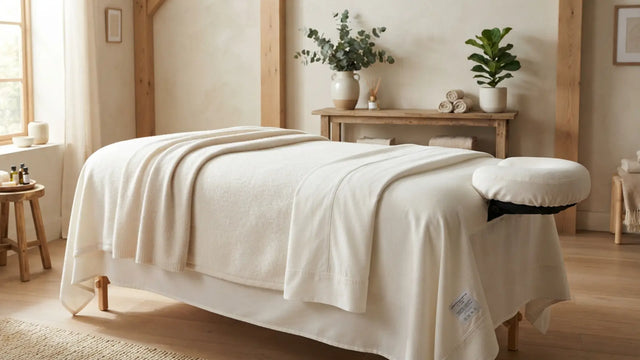
A standard set has three pieces:
-
Flat sheet: covers the table and drapes the client
-
Fitted sheet: wraps around the table cushion with elastic edges
-
Face cradle cover: a small fitted cover for the face rest cushion
Regular bed sheets can work in a pinch. But they wear out faster, fit poorly on narrow tables, and often lack the elastic grip a moving client needs.
Massage Table Sheet Sizes and Fit
Getting the size right matters more than any other buying decision. A sheet that is too small will pop off mid-session. One that is too large bunches up and looks unprofessional.
Standard Massage Table Sheet Sizes
Most professional massage tables use the same three sizes:
|
Piece |
Size |
Notes |
|
Flat sheet |
61" x 100" |
Enough coverage for full-body draping |
|
Fitted sheet |
36" x 78", 7.5" drop |
Fits tables up to 7.5" thick, including tables with a warmer or fleece pad |
|
Face cradle cover |
Fits standard crescent face rests |
Check the cutout size if your cradle is oversized |

Standard 3-piece massage table sheet set, with sizes labeled
How to Measure Your Table Before You Buy
Follow these four steps before ordering:
-
Measure the table length and width at the top surface.
-
Measure the thickness, including any pad or warmer you leave on.
-
Measure the face cradle opening if it is an unusual shape.
-
Compare your numbers to the fitted sheet’s listed drop before buying.
If your table sits between two sizes, size up. A slightly loose fitted sheet is safer than one that will not stretch over the corners.
Massage Table Sheet Fabrics Compared
Fabric choice changes how sheets feel, how fast they dry, and how well they handle oil. Here is how the most common options compare.
Cotton Flannel
Cotton flannel is a natural, breathable fabric brushed on both sides for softness. It holds warmth, which clients notice on cold days or during hot stone work.
Because it is 100% natural fiber, cotton flannel is hypoallergenic and gentle on sensitive skin. It also releases massage oil more easily in the wash than synthetic blends.
The tradeoff is dry time. Flannel takes longer to dry than microfiber, so busy practices need more sets in rotation.
Microfiber
Microfiber massage sheets are lightweight, quick-drying, and resistant to wrinkles. They wick oil and lotion away from the surface, which helps with high client volume.
Microfiber is a synthetic fiber, so it will not hold warmth the way flannel does. Some clients with sensitive skin prefer a natural fabric instead.
Other Fabrics You Will See
Bamboo and organic cotton sheets also show up in searches. Bamboo is soft and moisture-wicking, but it is less common in professional-grade weights built for daily commercial washing.
Organic cotton offers the same natural feel as flannel with a chemical-free growing process. It typically costs more and is harder to find in bulk packs.
|
Fabric |
Feel |
Dries |
Warmth |
Best For |
|
Cotton Flannel |
Soft, brushed |
Slower |
Holds warmth |
Hot stone work, sensitive skin, cold rooms |
|
Microfiber |
Silky, light |
Fast |
Cool |
High-volume practices, quick turnaround |
|
Bamboo |
Soft, cool |
Medium |
Cool |
Eco-focused practices, limited pro options |
|
Organic Cotton |
Soft, natural |
Slower |
Holds warmth |
Chemical-sensitive clients, premium positioning |
Cotton flannel and microfiber remain the two most practical choices for a professional massage table. Explore Cotton Flannel Massage Table Sheets or Microfiber Massage Table Sheets to compare current options.
How Many Massage Table Sheet Sets Do You Need?
Most therapists keep at least a two-day supply of clean linens on hand. That way you are never caught short while a load is still in the wash.
Use this rule of thumb:
-
1 to 3 clients a day: 4 to 6 sets
-
4 to 6 clients a day: 8 to 10 sets
-
7 or more clients a day, or multiple therapists: 12 or more sets, often bought in bulk packs
Buying in 2-packs or 10-packs usually lowers the price per set. It also means fewer reorders during busy seasons.
How to Care for Massage Table Sheets
Removing Massage Oil From Sheets
Oil stains set permanently if they go through the dryer. Follow these steps within 24 hours of use:
-
Pre-treat the oil spot with a degreasing dish soap or citrus-based cleaner.
-
Rub gently into the fabric and let it sit for a few minutes.
-
Machine wash in warm water with a normal detergent.
-
Check the spot before drying. Repeat pre-treatment if any oil remains.
-
Air dry, or tumble dry on low, only once the stain is gone.
Never dry sheets that still smell of oil. Heat sets the stain permanently, and oily fabric in a hot dryer is a fire risk.
Washing and Drying Best Practices
-
Wash in warm, not hot, water to protect elastic and color.
-
Avoid fabric softener. It coats fibers and reduces oil absorption in future washes.
-
Tumble dry on low heat, or line dry to extend fabric life.
-
Wash new sheets once before first use to remove manufacturing residue.
How Often to Change Massage Sheets
Standard practice calls for a full linen change after every client, with sheets laundered before reuse. The American Massage Therapy Association includes sanitation and hygiene in its Standards of Practice for exactly this reason.
If you see back-to-back clients, keep enough clean sets ready before your first appointment.
Massage Table Sheets vs Other Options
Disposable vs Reusable Massage Table Sheets
Disposable sheets remove the laundry step, but the cost adds up fast at high volume. A therapist seeing five clients a day can spend more yearly on disposables than on reusable sets.
Reusable cotton or microfiber sheets cost more upfront but pay for themselves within a few months for most practices. They also feel more premium to clients than paper.
Waterproof Covers vs Fitted Sheets
These solve different problems. A fitted massage table sheet is fabric, breathable, and designed for comfort against skin. A waterproof cover is a separate plastic or vinyl layer that protects the table cushion itself, not the client.
Most practices use a fitted fabric sheet as the layer clients feel. A protective cover goes underneath only if the cushion needs extra protection.
How to Choose the Right Massage Table Sheets
Work through this checklist before you buy:
-
Fabric: cotton flannel for warmth and natural fiber, microfiber for fast turnaround
-
Size: match your table’s exact length, width, and thickness
-
Elastic quality: strong, all-around elastic keeps the fitted sheet from slipping
-
Fabric weight: heavier fabric survives daily commercial washing longer
-
Price per set: compare cost per set in bulk packs, not just the sticker price
-
Return policy: look for a guarantee in case sizing does not match your table
Shop Cotton Flannel Massage Table Sheets or Microfiber Massage Table Sheets to see current sets, sizes, and colors.
Frequently Asked Questions
What is the standard size of a massage table sheet set?
A standard 3-piece set includes a 61 inch by 100 inch flat sheet, a 36 inch by 78 inch fitted sheet with a 7.5 inch drop, and a fitted face cradle cover. This fits most professional massage tables, including tables with a warmer or fleece pad underneath. Always confirm your table's exact thickness before ordering.
How many massage table sheet sets should I own?
Most therapists keep at least a two-day supply on hand. If you see 1 to 3 clients a day, 4 to 6 sets is usually enough. Busier practices with 7 or more clients a day, or multiple therapists sharing tables, typically need 12 or more sets in rotation.
Is cotton flannel or microfiber better for massage tables?
Cotton flannel holds warmth and feels soft against sensitive skin, making it a strong choice for hot stone work and cold rooms. Microfiber dries faster and resists wrinkles, which suits high-volume practices. Neither fabric is objectively better. The right choice depends on your client volume and room temperature.
How do you get massage oil out of sheets?
Pre-treat the oil spot with a degreasing dish soap or citrus-based cleaner, then machine wash in warm water within 24 hours of use. Check the spot before drying and repeat pre-treatment if any oil remains. Never dry sheets that still smell of oil, since heat sets the stain permanently.
Can I use regular bed sheets on a massage table?
Regular bed sheets can work temporarily, but they wear out faster under daily commercial washing and often fit narrow massage tables poorly. They also lack the reinforced elastic that keeps a fitted sheet in place during a session. Purpose-built massage table sheets last longer and fit more securely.
How often should massage table sheets be washed?
Massage table sheets should be changed and freshly laundered after every client, not just at the end of the day. This is a standard hygiene practice reflected in professional bodywork association guidelines. Keep enough clean sets ready before your first appointment if you see back-to-back clients.
What is the difference between a fitted sheet and a waterproof cover?
A fitted massage table sheet is fabric, breathable, and designed to feel comfortable against a client's skin. A waterproof cover is a separate plastic or vinyl layer that protects the table cushion itself rather than the client. Most practices use a fabric sheet on top, with a cover underneath only if needed.
Are disposable massage table sheets worth it?
Disposable sheets remove the laundry step, but the per-use cost adds up quickly at high client volume. A therapist seeing five clients a day often spends more per year on disposables than on a rotation of reusable cotton or microfiber sets, which also feel more premium to clients.